
{UAH} Hilary Boniface Ngweno: The Forgotten Harvard University Nuclear Physics Genius Who Later Excelled As A Journalist
|
6:55 PM |
No comments |

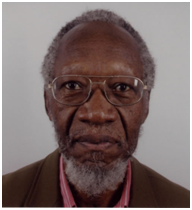 Over 80 years and still kicking strong
Kenyans remember him as the journalist that owned the famous red weekly magazine called "The Weekly Review" that resembled NY Times Magazine, but not many knew that his major at the prestigious Harvard University, was Mathematics and Nuclear Physics and not Journalism.
After returning to Kenya as a young man while equipped with a Nuclear Physics Harvard degree, Mr Hilary Ngweno, could not get a job that could match his unique degree. It was a unique one many had not heard of but that did not deter the bright and hard working man, who eventually became a successful journalist.
He could have maybe ended as a lecturer but he chose not to and pursued Jounalism vigorously to eventually become a force to reckon with.
Those days, the people that used to feature their stories in the local newspapers were Fibi Munene, Murray Ngoima, Margaretta Wa Gacheru, George Githii, Chege Mbitiru but Hilary was on top of all.
He was among the early few ones that had made it to the Ivy league colleges with other famous Kenyans like Dr. Kiruthi Gachangi, and Ngengi Muigai, (Uhuru's cousin) who later became an assistant Minister in Kenyatta and Moi Government.
 a sample of the weekly review that would come with top story of the week
Ng'weno was unquestionably a famous journalist in the postcolonial Kenyan history. He proved that the press, or rather the media, commonly referred to as the fourth estate, is an effective tool that can dominate and arouse public debate.
We may write biographies about Kenyan political leaders and while doing so, we must not forget media personalities that have shaped and played a big role in the politics of Kenya, and such among others, are people like Hilary Ngeno.
Excerpts from his bio indicate that he was born on 28 June 1938 in Nairobi, and raised at the famous "cheng" capital called Muthurwa. That was the place his father worked for East African Railways. He attended St. Peter Cleavers Primary School and later joined the famous Mang'u High School near Thika. After emerging as a top student, he was among the early pioneers that were admitted to the prestigious Harvard University in USA, where he studied Mathematics and Nuclear Physics.
We are told it was there that he met and married Fleur Arabelle, a French holder of a BSC degree in conservation who later became the editor of Rainbow magazine. Hilary the father of journalism in Kenya is also a father of two daughters Amolo and Bettina.(We may not write about them here but the two are smart ladies that have also published works of literature)
Even though Hilary never made use of his science-oriented studies, from Harvard University, it was there that his interest in journalism began to take shape because as a student, he wrote college newsletters. It was there too that his consciousness on racial discrimination in the 1960's, dawned on him but as a student, there was nothing much he could do to change the open segregation that was the norm those days.
After returning to Kenya in 1962, Hilary became a reporter, and columnist for the Daily Nation newspaper and at the young age of 26, where rose to become the first indigenous Kenyan editor-in-chief of the Nation Group of newspapers on 1 June 1964, succeeding Graham Rees. Many say that his fast rise was due to the fact that he had interacted with the founder of Nation Group the Aga Khan, while studying at Harvard University.
The Daily Nation position thereafter, completely opened his journalism career to the real fourth estate and he would eventually be among the chief key speakers at 14th Annual General Assembly of International Press Institute held in 1965 at Grosvenor House, London.
It was there that he would brush shoulders with press gurus and British leaders like Lord Shawcross, Harold Wilson and Cecil King, among many other leading press figures from Africa.
The door to his journalism world was simply opened at that conference. After returning to Kenya, it was as if he had the key to open any door to deliver news anywhere to the world. That was all he needed and now that he had the correct tools, he never hesitated and in May 1965 he quit the Daily Nation to become a freelance journalist.
He then finally had had a platform, and using his skills already acquired, he was comfortable to start his journalism career where he intended not only to be a local journalist, but a global journalistic figure.
In order to perfect his new career, he once again joined Harvard University as a Fellow of Harvard Centre for International Affairs (1968-69), and studied, through a Ford fellowship, film production and television at Brandeis University USA (1969-70).
Many famous journalist like Chege Mbitiru , Margaretta Wa Gacheru and Fibi Munene may have been inspired by the brilliant journalist among many Kenyans in those years, that yearned to receive without fail, his weekly magazine "The Weekly review" that was mainly read by the well to do elite class.
By Arch. Dr. Isaac Kinungi- Written after reading from various sources

Ng'weno in the Weekly Review
Ng'weno's criticism of Eurocentric approaches might have been an influence of Harvard, a place he not only cyclostyled newsletters to African students in the US but also connected with the Aga Khan, the founder of Nation Media Group in Kenya. As part of his presentation during the 14th Annual General Assembly of the International Press Institute of 1965, Ng'weno advocated for press freedom, and identified three threats to press freedom as: state, courts and ownership or control by expatriates. On his second return to Kenya, Ng'weno launched his own newspaper The Weekly Review in February 1975 in a bid to exercise press freedom he had envisioned in 1965. The WR became part of his larger company, Stellascope Ltd, a home to other publications, as a chief editor, including Rainbow (September 1977), Joe Magazine, Financial Review, Sports Magazine and Business World. The WR embodied his skepticism of foreign owned newspapers. He felt that foreign ownership of the press promoted Eurocentric concerns, instead of offering an African view of socio-political realities in independent African countries.
He therefore construed that the only newspapers, Nation and Standard, which were owned by expatriates and foreigners, curtailed press freedoms and lacked 'comprehensive sufficient background information and analysis of weekly events' within the local realms. Ng'weno's perception of free press was commingled within the WR. Apart from print media, Ng'weno worked with Kenya Broadcasting Cooperation in 1972, Esso Standard (East Africa) Limited and has also produced documentary films like 'Makers of the Nation'. He is a recipient of a Rockefeller Award (1977) due to his contribution to journalism. His early connections shaped his path towards the struggle for press freedom.
Prophetic Jounalism
Ng'weno's Weekly Review (1983)
Apart from chronicling the political environment of independent Kenya and her global connections, Ng'weno revisits the ideas and hopes of independence. By focusing on the past enthusiasm on attainment of independence, Ng'weno comments on disillusioned Kenya, making reference to Kenya's contribution and influence on global connections. In 'A Letter from Kenya' he acknowledges all the dignitaries that attended the midnight 11-12 December 1963 Uhuru celebrations. Among the dignitaries, from Africa, were delegates from Ghana, Nigeria, Southern Rhodesia, and Tanzania: from overseas were delegations from China, Britain, USA, India, Pakistan and Israel. These were portrayals (and symbols) of the global contacts of the new state and at the same time mirrored the global figure of Ng'weno.
Due to his racial awareness as a student in America, Ng'weno blames expatriates for the grim artistic scene in Africa. In 'Letter from Nairobi', he highlights that East African arts were dominated by expatriates like Blixen, Hemingway and Ruark and that theatre and the Kenya Film Society were in the hands of foreigners. As early as 1970 Ng'weno, in prophetic-like journalism, singles out the would-be great literary icons within East Africa when he acknowledges, in the letter, African artists, among them writers including, from Kenya, Ngugi wa Thiong'o, Grace Ogot, Rebecca Njau and Kudlip Sondhi (of Asian origin); from Uganda, Okot p'Bitek; and, from Tanzania, Walter Bogoya In paintings, he applauded Eli Kyeyune from Uganda, Louis Mwaniki from Kenya and Sam Ntiro from Tanzania as the best within East Africa. As a product of his global contacts, within the East African region, Ng'weno served as director of Chemchemi journal (initiated by a South African writer Ezekiel Mpahlele in 1964), chairman of Paa-Ya-Paa-Gallery Ng'weno's global contact draws his attention at the disappearance of old artistic traditions, traditions which would have equaled the ones in Arabia and Persia. Indeed Ng'weno, through the WR and his global contacts, transformed the public discourse on myriad issues in journalism. For instance, in the 14 July 1975 issue, Ng'weno lauds East Africa's cordial relationship, between Uganda and Kenya in particular.
Despite his mild criticism of African governments, he maintained cordial relationships with the governments of the time, a quality attained at Harvard, a foreign place, but where he cyclostyled newsletters to African students. He occupied the middle ground and urged both government and its critics to lower their voices 'a little so as to hear one another better'. However, this does not mean that political concerns featured less. In fact, the WR was dubbed a political magazine, corroborating its initial purpose to give a 'comprehensive, unbiased and free interpretation of the many occurrences'. Among the occurrences are liberation heroes in Kenya's history including Mzee Jomo Kenyatta, Achieng Aneko, Paul Ngei, Bildad Kaggia, Fred Kubai, Tom Mboya, and Kungu Karumba. This candid purpose kept the WR in circulation surviving, sometimes, the turbulent political moments of Moi regime (1978-2002). Perhaps, aware of the WR as a platform for knowledge and opinion (in politics), KANU bought Stellascope Ltd and Nairobi Times in 1983. In 1993 and 1999 he was the Chairman of Kenya Wildlife Service and member of Kenya Revenue Authority respectively, which were perceived as political appointments. Incidentally, in 1999 the WR wound up its publications.
Ng'weno's global influence was two-fold. First, it ignited his African racial consciousness while at the same time plunged him into journalism. Secondly, global links transformed his perception of local politics and in equal measure used the links as a platform for voicing local politics. Even though the WR closed down in 1999, it enshrined places that Hilary Boniface Ng'weno traversed as a student at Harvard University, and in his career as a journalist. Today, Ng'weno is considered as the father of, and an icon in, journalism in Kenya and Africa.
TRIBUTE FROM MARGARETTA WA GACHERU
It was my privilege to be hired by Hilary several months before the newspaper actually came out since that meant I could hear his pearls of wisdom regarding how to fulfill my job description, given I had only one journalism job before his (with the National Christian Council of Kenya at its weekly publication, "Target") and I had just completed a master's degree in Literature from University of Nairobi. So I felt Hilary actually hired me on trust, his trust of my former editor, the late Odhiambo Okite, and the quality of my interview with him which was thoughtful and honest.
Hilary also hadn't gotten a degree in journalism. His field had been nuclear physics at Harvard (I believe) and then I think he studied for a time under Henry Kissinger. But that is hearsay since I didn't learn those details from the man himself. In fact, I had been advised early on to keep my distance from my boss since the No. 2 in the office, Sarah, didn't like people (particularly women) getting too close to him. Nonetheless, the few conversations I had with him were always instructive and I credit much of the knowledge I have working in journalism as come from Hilary.
Hilary has always been way ahead of his time journalistically, and in other ways as well. His work in documentary filmmaking has yet to be fully recognized or appreciated for what it means in the way of permanently archiving the lives of great Kenyan leaders. He may be celebrating the sort of birthday that implies it is time for him to retire. But if that time ever comes, be assured Hilary leaves a journalistic legacy that deserves study and emulating by other up-and-coming Kenyans who would wish to hold a candle to this 'guka' of the Kenyan Media.
Disclaimer:Everyone posting to this Forum bears the sole responsibility for any legal consequences of his or her postings, and hence statements and facts must be presented responsibly. Your continued membership signifies that you agree to this disclaimer and pledge to abide by our Rules and Guidelines.To unsubscribe from this group, send email to: ugandans-at-heart+unsubscribe@googlegroups.com
---
You received this message because you are subscribed to the Google Groups "Ugandans at Heart (UAH) Community" group.
To unsubscribe from this group and stop receiving emails from it, send an email to ugandans-at-heart+unsubscribe@googlegroups.com.
To view this discussion on the web visit https://groups.google.com/d/msgid/ugandans-at-heart/CABfZXG2Srqgt9BQ2qcF1%2BrO6g8p%2B1k_BNCB2EYFBAUBB9ZPJ1Q%40mail.gmail.com.


0 comments:
Post a Comment